VNG is an eye-movement test that looks for the source of dizziness and balance trouble after a concussion. Camera goggles film your eyes as you follow moving lights and shift positions, and the recording shows whether the inner ear or the eye-movement system is involved.
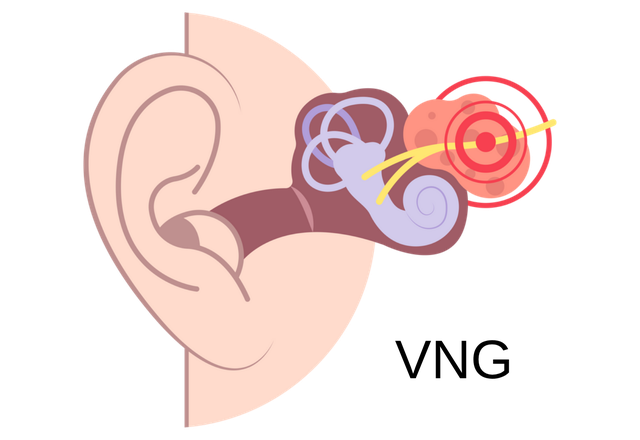
Your physician orders this test when the exam points to a need for it. We schedule it and follow up until the results are in your chart.
What is a VNG test?
VNG stands for videonystagmography. Infrared goggles film your eyes while you watch moving targets, turn or lie in different positions, and sometimes have air or water warmth in each ear. Your eyes make small movements you cannot control, and those movements tell us how the balance system is working.
Why does it matter after a concussion?
Dizziness that lingers after a concussion usually has a source that can be found. It may be the inner ear, the nerves that steer the eyes, or the neck. VNG separates these, so treatment goes after the right one. It also explains why a busy store, a scrolling phone or turning your head can set symptoms off.
What will you feel?
Some parts can make you feel dizzy for a short time. That is expected and part of how the test works. Your technician never leaves you during the test.
How should you prepare?
Leave off eye makeup. Ahead of the test, check with your physician about pausing any sleep or dizziness medicines for a day or two; never stop one by yourself.
What should we know before the test?
- A neck injury that limits how you can turn or lie down; the positions are changed to protect your neck
- Recent eye surgery
- Any seizure, including one since the injury
How much time should you plan?
Plan on about 45 to 60 minutes.
Go to the emergency room or call 911 if, after a head injury, you have a headache that keeps getting worse, vomit more than once, have a seizure, slur your words, feel new weakness or numbness, or become more confused or hard to wake. Do not wait for a physiotherapy visit.
What to remember
- Feeling briefly dizzy is expected.
- Come without eye makeup.
- Check with your physician about pausing medicines.
Show us you have it: At your next visit, name the medicines you plan to check on with your physician. Questions are welcome; we are glad to go over it twice.
Read more on this site: why dizziness lasts after a concussion.
Other tests your physician may order
- Cognivue Memory Test After a Concussion
- Kinetisense Balance Test After a Concussion
- EMG Arm Nerve Test After Whiplash
- CMAT Autonomic and Heart Rate Variability Test After a Concussion
- RQ Metabolic Breathing Test After a Concussion
This page belongs to our physiotherapy after a concussion program. Our physicians examine you, sign each order and watch over the care, and treatment waits whenever no physician is in the building to step in. Our technicians are trained and checked on every machine; they are not physical therapists.